01
Wine identity
Producer, wine name, grape or style, region, and vintage when known.
Wine tasting notes
A useful wine tasting note records the bottle, the moment, a few aromas, the wine's structure, the finish, and whether you would drink it again. Keep it short enough to write and specific enough to help your future self.
Best short answer
The best note answers three questions: What did I notice? How did the wine feel? Would I choose it again? The producer's description can add context after you have recorded your own impression.
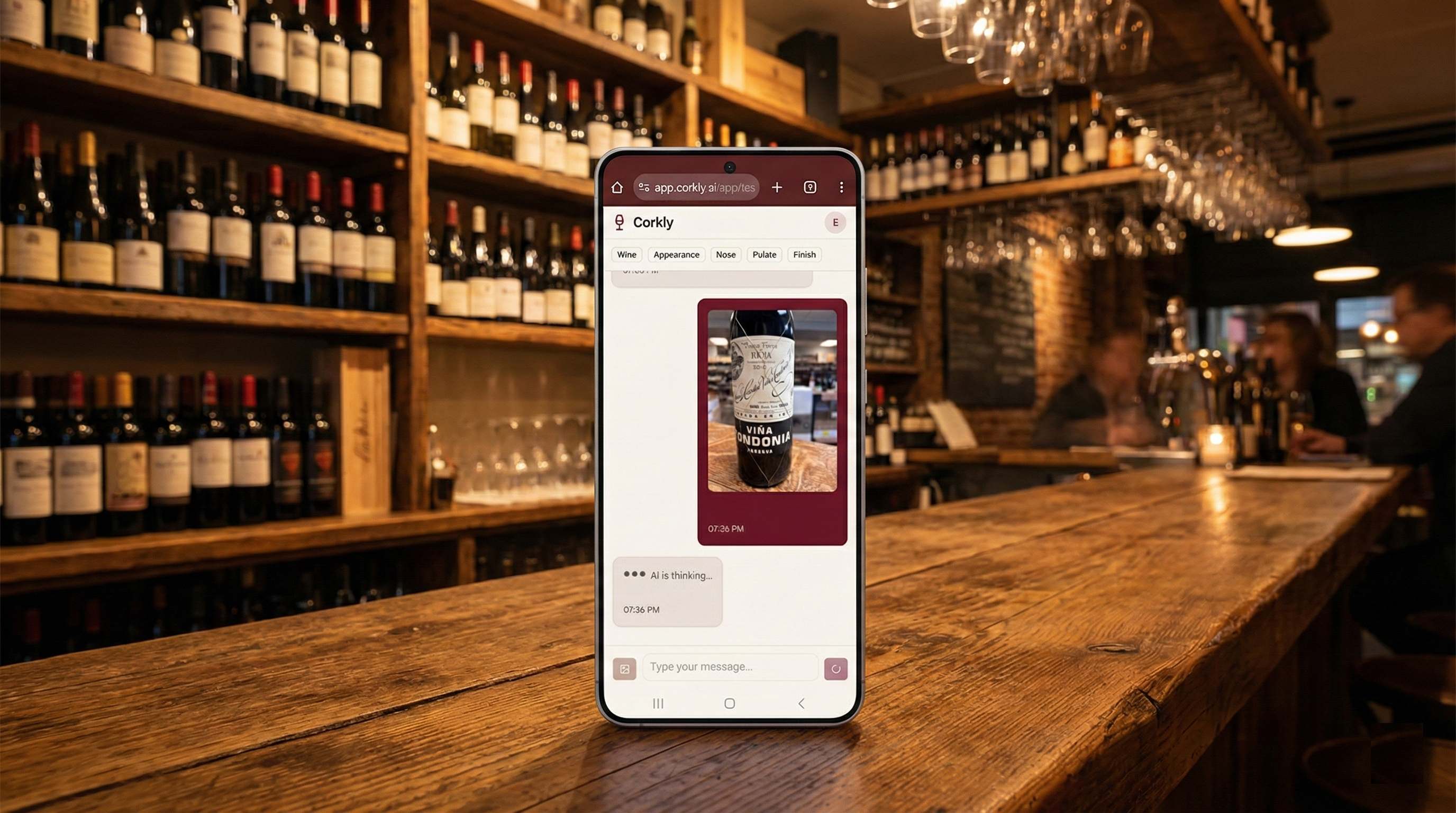
A complete note
Producer, wine name, grape or style, region, and vintage when known.
Where you tasted it, what you ate, who you were with, and serving temperature.
One useful color phrase, such as pale lemon, ruby, garnet, or deep purple.
Two to four honest clues grouped broadly as fruit, floral, herbal, earthy, spicy, or oaky.
What the flavors became after the sip and whether they matched the smell.
Sweetness, acidity, tannin, body, and alcohol using simple low-medium-high scales.
What remained after the sip and whether it disappeared quickly or stayed.
A rating, whether you would drink it again, and the occasion or food it suits.
Use this when a long tasting grid feels like homework. Fill each line with the first accurate words that come to mind.
Need help with acidity, tannin, body, or finish? Open the wine glossary.
Wine: [name, grape/style, vintage]
Where: [place, food, people]
Smells like: [2-4 honest clues]
Feels: [dry/sweet, acidity, tannin, body]
Finish: [short/medium/long + final flavor]
Again? [yes/no + the occasion]
Plain-English examples
Pale lemon. Smells like grapefruit, lime, and cut grass. Dry, light-bodied, and very mouthwatering, with a short citrus finish. I would drink it again with goat cheese, seafood, or a hot afternoon.
Why it works: It records aroma, structure, finish, and a repeatable use case without pretending to know the exact region.
Light ruby. Cherry, raspberry, dried leaves, and a little spice. Dry and light-bodied, with bright acidity and soft tannin. I liked the silky texture and would order it again with roast chicken or mushrooms.
Why it works: It separates what the wine smelled like from how it felt and ends with a clear preference.
Keep the same fields for every wine. Consistency lets you compare Chardonnay with Chardonnay, notice whether you repeatedly enjoy high acidity, and remember which food or occasion made a bottle work.
Search by grape, region, rating, descriptor, and whether you would drink the wine again. The goal is not a perfect archive. It is a memory that helps you choose the next bottle with more confidence.
Record the wine identity, context, appearance, main aromas, palate, structure, finish, and your personal decision. You can capture all eight in a few sentences.
A useful beginner note is usually two to five sentences. It should help your future self remember the wine and decide whether to drink or buy something similar again.
Use the format you will actually revisit. Paper is fast and distraction-free. An app is easier to search, compare across tastings, attach to a bottle identity, and use for personalized learning over time.
Start with broad categories and physical sensations. Fruity, herbal, earthy, crisp, creamy, light, rich, or drying are useful. You do not need to name a specific fruit for the note to be valid.
Save the learning
Corkly turns a guided tasting into a saved artifact with your observations, learned descriptors, rating, and next-to-try guidance.
Further reading: WSET: Build wine tasting skills and WSET's systematic approach.