Is Champagne sweet?
Most Champagne people buy is brut, which means it should taste dry rather than sugary. Extra dry is actually a little sweeter than brut, while demi-sec is the style to look for if you want obvious sweetness.
Sparkling wine· Champagne, France
Champagne tastes dry, crisp, citrusy, and lightly toasty, with green apple, lemon, chalk, fine bubbles, and a signature brioche note. Most brut Champagne tastes refreshing rather than sweet because high acidity balances the fruit.
Champagne taste: dry, toasty, citrusy, and not sugary
The fastest way to understand Champagne is this: it is usually crisp and dry, with lemon and green apple first, then chalk, almond, toast, or brioche. Brut Champagne can smell fruity without tasting sweet because the acidity keeps the finish bright.
At a glance
Everything that shapes how Champagne tastes, in plain language.
Fruit
01Bright apple, lemon, and pear, often with a hint of berry in rosé Champagne.
Body
02Light
Acidity
03High
Tannins
04None
Flavor profile
Who will like it
Anyone celebrating, or anyone who loves complexity in a glass of bubbles.
On the nose
Smell these in your glass? You're probably tasting Champagne.
In plain English
“Champagne is sparkling wine made the patient way. The 'toasty' or 'bready' note comes from yeast aging — that's what sets it apart. The bubbles are tiny and elegant.”
At the table
Champagne works best with these foods.
Common questions
Most Champagne people buy is brut, which means it should taste dry rather than sugary. Extra dry is actually a little sweeter than brut, while demi-sec is the style to look for if you want obvious sweetness.
Toast, brioche, biscuit, and almond notes usually come from time aging on yeast lees. That aging is one reason Champagne can taste more layered and savory than simpler sparkling wines.
Choose brut for the classic crisp, dry Champagne taste. Choose extra dry if you want a rounder, softer bottle with a little more sweetness, even though the label sounds drier.
Champagne is usually drier, more citrusy, more mineral, and more toasty. Prosecco often tastes fruitier, softer, and more apple-pear driven. For the full breakdown, read Corkly's Prosecco vs Champagne comparison.
Useful next step
Choose the guide that matches what happens next: selecting a bottle, serving it well, or saving what is left.
Sparkling wine tools
Champagne corks are under pressure. These openers give you more control than twisting the cork by hand, especially when the bottle is cold, wet, or being opened for guests.
Disclosure: Corkly may earn a commission from qualifying purchases through affiliate links at no extra cost to you. We choose picks for usefulness and fit, not for live prices or ratings.
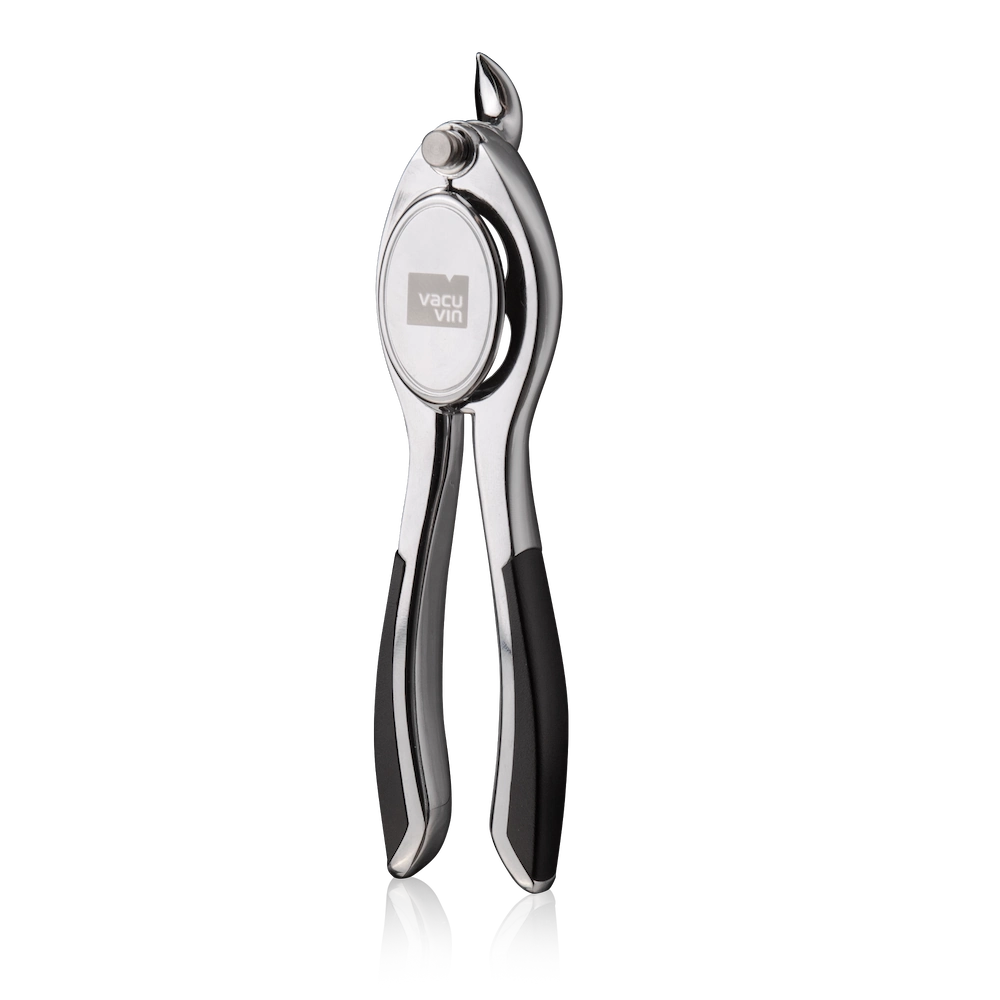
Best for: easy, controlled Champagne opening
A stainless-steel opener that removes the foil, cage, and cork in one controlled motion. The best fit if you want the least drama when opening sparkling wine.

Best for: compact gifts and bar carts
A compact star-shaped opener that grips the cork and helps you twist it out cleanly. It is small, giftable, and easy to keep near the bar cart.
Wine.com shortcuts
If the flavor profile sounds right, use these durable Wine.com searches to compare brut, Blanc de Blancs, rosé Champagne, extra dry Champagne, and current inventory.
Disclosure: Corkly may earn a commission from Wine.com links at no extra cost to you. Availability varies by state and vintage, so these are shopping shortcuts rather than live inventory promises.
Classic brut
Best for: the baseline Champagne taste: citrus, green apple, toast, chalk, and dry bubbles
This is the safest shopping shortcut for readers who came from 'what does Champagne taste like?' and want the standard style.
Find brut ChampagneSharper style
Best for: lemony, chalky, Chardonnay-based Champagne with a cleaner mineral edge
Blanc de Blancs gives the taste article a style-specific click for readers who want precision rather than richness.
Find Blanc de BlancsFruitier style
Best for: strawberry, raspberry, and a little more dinner-table flexibility
Rose Champagne is visually and flavorfully distinct, making it an easy next click for readers comparing styles.
Find rose ChampagneBrowse all
Best for: checking current inventory, gifts, and bottles by budget
A broad Champagne search remains useful even when specific bottles rotate out of stock.
Shop ChampagneThe cellar
Hand-picked bottles from across the price spectrum — from approachable everyday pours to occasion-worthy splurges. Links go to Wine.com; we may earn a small commission on purchases at no extra cost to you.
A crowd-pleasing brut Champagne with citrus, apple, and toasty depth — classic enough for beginners, polished enough for a real celebration.
View on Wine.comBlanc de Blancs from four Grand Cru villages — pure Chardonnay, laser-focused, and exactly what serious Champagne lovers chase.
View on Wine.comA dependable traditional-method Champagne for readers who want real Champagne character — bright citrus, toast, and fine bubbles without chasing a rare bottle.
View on Wine.comBeyond the page
Corkly's AI sommelier guides you through every sip — pointing out aromas, explaining the texture, and helping you put words to what you're tasting. Build your palate one wine at a time.
Adjacent
If you enjoy Champagne, these are worth exploring next.
Prosecco is Italy's effortless sparkling wine — light, crisp, and full of fresh pear and green apple. It's bubbly without the seriousness of Champagne, and built for everyday celebration.
Chardonnay is the world's most versatile white. It can taste like crisp green apple and lemon, or rich butter and toast — depending on how it's made. There's a Chardonnay for everyone.
A natural next step
Prosecco is Italy's effortless sparkling wine — light, crisp, and full of fresh pear and green apple. It's bubbly without the seriousness of Champagne, and built for everyday celebration.
Chardonnay is the world's most versatile white. It can taste like crisp green apple and lemon, or rich butter and toast — depending on how it's made. There's a Chardonnay for everyone.
Burgundy Pinot Noir is the gold standard for Pinot — refined, earthy, and obsessed with terroir. Expect tart red cherry, mushroom, and forest floor wrapped in silky, ethereal tannins.
In the wild
Only sparkling wine from the Champagne region of France can use the name. Look for grower-producer (RM) bottles for value.
Looking for a specific bottle? We're building a smarter way to discover wines you'll love. Get started with Corkly to track every wine you taste.
The closing pour
Start your first tasting with Corkly and build a palate you can speak about with confidence.