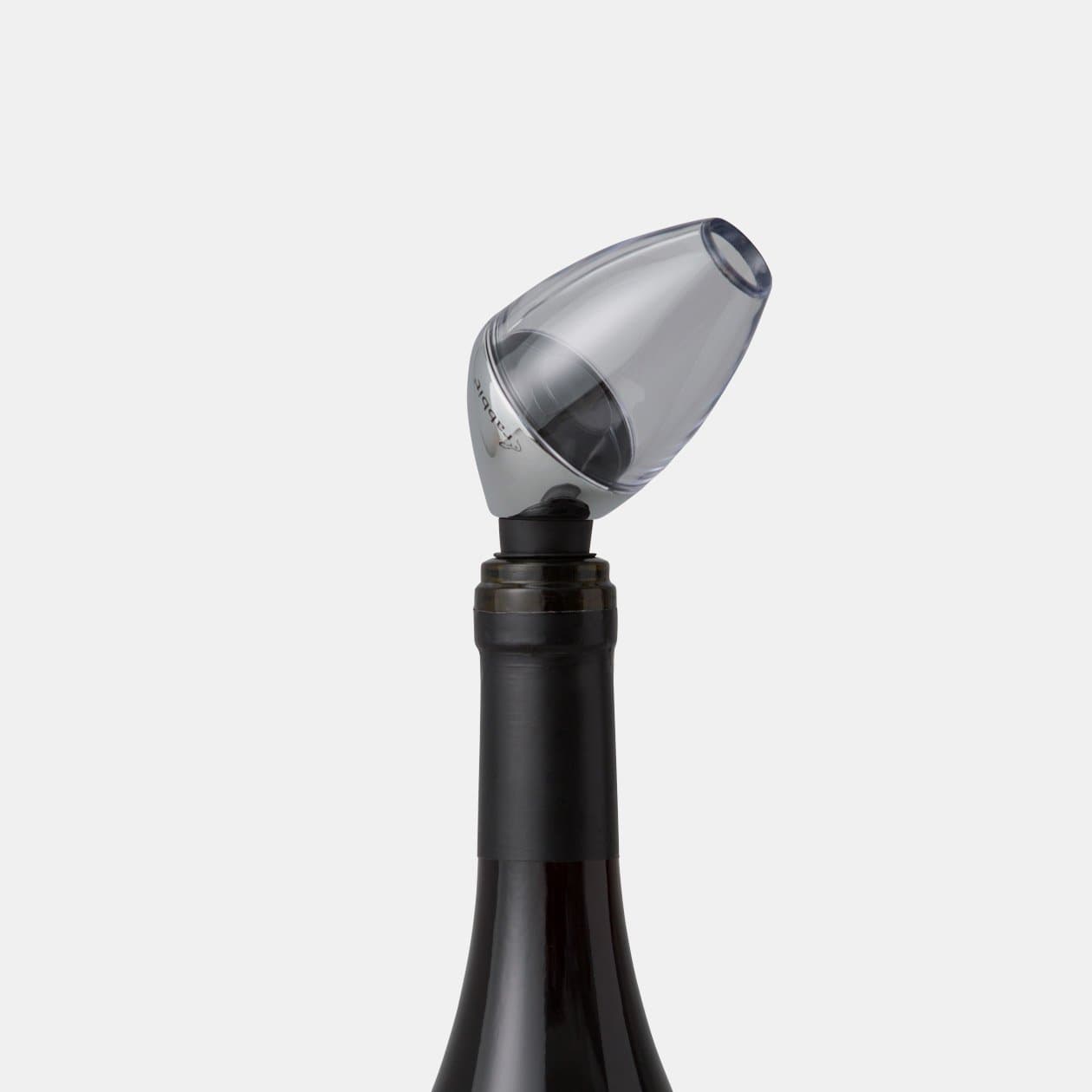
Editor's choiceRabbit
Wine aerator and pourer
Slips into the bottle's neck. Pours and aerates in one motion — no second hand needed. The everyday workhorse for big reds.
View on AmazonShort answer: yes, but only on the right wines. An aerator forces wine through tiny channels of air, instantly softening tannins and waking up aromatics. On a young, tannic red, the difference is real. On a delicate Pinot or a chilled white, you can skip it. Here's how to choose.
A decanter exposes the whole bottle to air slowly — over 30–60 minutes. An aerator does it instantly, glass by glass. Decanters give you finer control. Aerators are way faster, and the difference at the table is bigger than most people expect.
If you are choosing between the two, start with Corkly's best wine decanters guide for full-bottle service, older reds, and buyer criteria like base width, pour control, and cleaning difficulty.
Slips into the bottle's neck. Pours and aerates in one motion — no second hand needed. The everyday workhorse for big reds.
View on Amazon
Hold over a glass and pour through. The signature whoosh sound is the air doing real work. The classic for a reason.
View on AmazonWhy not both? A glass decanter with an aerating spout in the base. Pour the whole bottle in and let it breathe — fast then slow.
View on AmazonKeep exploring
A practical decanter buyer guide for affordable picks, older reds, gifts, and statement pours.
Read guideWeird, sculptural, gift-worthy decanters — and when to buy the simpler one instead.
Read guideA gift-focused decanter guide that helps buyers choose practical first or sculptural when it fits.
Read guideRed, white, or universal? The right wine glass for the way you actually pour.
Read guideA universal-first glassware guide for beginners who want better wine without buying a cabinet of stems.
Read guideA build-your-own tasting kit for blind comparisons, group flights, aroma practice, and saved tasting notes.
Read guideOpen sparkling wine with more control: compact and all-in-one Champagne opener picks.
Read guideBrush, beads, polish. The three-tool routine that keeps a decanter looking new.
Read guideElectric, lever, or waiter's corkscrew? Three solid picks for every type of pourer.
Read guideButton-press and lever-style openers that remove wrist strain without turning into novelty gadgets.
Read guideVacuum stoppers, silicone seals, or full preservation systems — how to make every bottle last.
Read guideA buyer guide for deciding when simple stoppers are enough and when Coravin-style preservation makes sense.
Read guideSlim, dual-zone, or countertop? The right wine fridge depends on what you actually drink.
Read guideStackable, wall-mounted, or countertop — store wine the right way without sacrificing space.
Read guideHand-picked wine gifts that look more expensive than they are.
Read guideGiftable wine tools that solve real problems instead of turning into drawer clutter.
Read guideInsulated totes and carriers built to keep bottles cold, safe, and unbroken.
Read guideSide-by-side tasting is the fastest way to learn what aeration actually does to a wine. Try it on a Cabernet or Malbec.
Disclosure: Corkly is a participant in the Amazon Services LLC Associates Program. We earn a small commission from qualifying purchases at no extra cost to you.